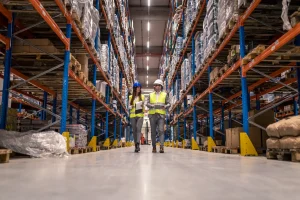

Logistics – what is it?
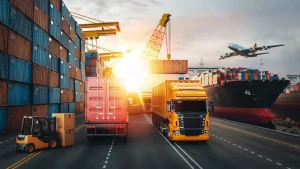
Wondering what logistics is? Logistics is a key element of every well-run business. It is regarded as the discipline concerned with managing and coordinating the various operations involved in the flow of goods, information and resources from the point of origin to the destination in accordance with the customer’s requirements. It is the broadly understood planning, organising, controlling and execution of transport processes, i.e. storage, warehousing, order handling and inventory management.
Types of logistics
Procurement logistics – focuses on managing the supply chain, i.e. the process of planning, managing materials, production, warehousing and distribution of goods from suppliers to customers. The main aim is to ensure smoothness and efficiency throughout the supply chain and to minimise costs.
Distribution logistics – focuses on managing the transport and distribution of finished products to customers. The task of distribution logistics is to ensure that products reach recipients at the right time, in the right place and in the right condition.
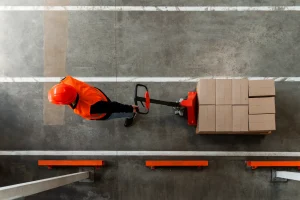
Warehouse logistics – covers the management of storage and warehousing processes. The aim of warehouse logistics is effective inventory management, optimisation of warehouse space and quick access to the materials needed.
Reverse logistics – concerns managing the processes of returning products from customers to manufacturers, including recycling, returns, refurbishment, etc. The task of reverse logistics is to minimise costs and maximise the value of returned products.
International logistics – covers the planning and management of transport, warehousing and distribution of goods at international level. The aim is to ensure compliance with international regulations, optimise the costs of international transport (e.g. transport to Turkey) and manage the risks associated with international operations.
Transport logistics – focuses on managing the movement of goods from point A to point B. It includes planning transport routes, choosing the appropriate means of transport (vehicles, ships, aircraft, trains, etc.), organising transport, monitoring shipments and optimising transport costs.
Production logistics – covers production planning, management of raw material and semi-finished product inventories, quality control, workflow management and optimisation of production processes. The aim of production logistics is to ensure that the production process is efficient, on schedule and cost-effective.
E-logistics – refers to the use of information and communication technologies in managing logistics operations. It is a modern branch of logistics that integrates traditional supply chain management methods with modern digital technologies.
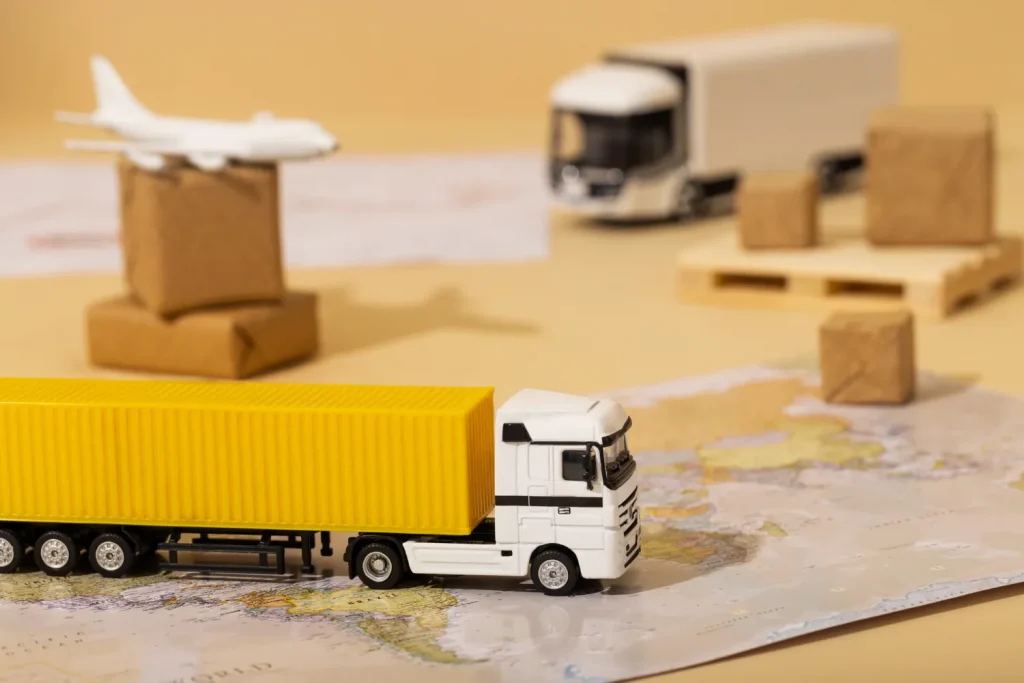
Classification of logistics by area of operation
Micrologistics – focuses on the smallest organisational and operational units within logistics. It concerns the management of detailed aspects of logistics, such as individual orders, individual transport routes, local warehouses or individual operational processes.
Mesologistics – deals with intermediate organisational or geographical units between micrologistics and macrologistics. It covers logistics management at medium scale, such as metropolitan areas, regional markets or specific industry sectors.
Macrologistics – refers to managing the flow of goods, services and information on a large scale, covering entire countries, regions or continents. It concerns the management of national and international supply chains, global transport networks and the coordination of logistics activities at macroeconomic level.
Eurologistics – focuses on the specific aspects of logistics in Europe as a geographical region. It covers the management of international supply chains in Europe, the integration of European logistics markets and adaptation to specific European regulations and standards.
Global logistics – refers to managing the flow of goods, services and information on a worldwide scale. It covers global supply chains, international transport networks, the management of international logistics operations and compliance with international regulations and standards.
What does logistics do?
The role of logistics in business goes far beyond simply moving goods. It is the comprehensive management of the supply chain, covering process optimisation, cost reduction and efficiency gains. Effective logistics translates directly into customer satisfaction, which in turn drives revenue growth and strengthens the company’s market position.
Logistics is of paramount importance for an organisation’s operational efficiency and for meeting customer needs by ensuring that products and services are available at the right time and place. Thanks to advanced technologies and IT systems, logistics is becoming ever more precise and effective, which helps companies become more competitive on the market.
What does a logistician do?
The role of a logistician is to manage the flow of goods, services, information and people from their point of origin to their destination, efficiently and in line with the customer’s requirements. A logistician’s daily duties include planning transport routes, managing warehouses, coordinating deliveries and collections, and overseeing documentation. A logistician must have analytical thinking skills to solve problems effectively and introduce improvements to existing processes.
In addition, the logistician is responsible for negotiations with suppliers and carriers, seeking to obtain the most favourable terms of cooperation. Their work has a direct impact on the company’s efficiency and customer satisfaction, as it ensures on-time deliveries and cost optimisation.
In an era of growing market competition, the logistician’s role is becoming ever more significant. Companies that invest in qualified specialists in this field gain a competitive advantage and can respond more effectively to changing market requirements.

How can effective logistics increase your company’s competitiveness?
Greater flexibility in logistics operations allows a rapid response to changing market needs and customer expectations. Shorter delivery times mean not only satisfied recipients, but also a competitive advantage that can decide whether potential customers choose your company. Cost optimisation through efficient supply chain management brings not only savings, but also higher profitability for the company. Improved customer service, a direct result of efficient logistics, translates into end-customer satisfaction and loyalty.
Effective inventory management allows optimal use of resources and minimises warehousing costs. Implementing modern logistics solutions is an investment that pays off in the form of greater competitiveness and better financial results. Remember that in today’s world it is not only the product, but also the way it is delivered, that determines your company’s success.