
What exactly is import and why is it worth your attention? What are the benefits and challenges of this process? In this article you will find all the answers to help you understand what import is and how to manage it effectively.
What is import? Definition
What does the term “import” actually mean? Put simply, import is the purchase of goods or services abroad with a view to using them on the domestic market. It mainly concerns the acquisition of goods or services from countries outside the European Union, which involves complying with specific customs procedures. In short – you bring goods in from abroad to sell them here, in Poland.
Import and customs procedures
Anyone involved in importing has to deal with bureaucracy. Customs procedures are extremely important here – the goods must pass customs control, and the business must present the appropriate documents. These are primarily:
- commercial invoice,
- packing list,
- transport documents,
- customs declaration.
Without the right documentation, bringing goods in is impossible. All these documents are checked by the customs authorities, who verify that everything is proceeding in accordance with the law.
Advantages of importing goods
Import can be the key to success on many business levels. Although it may seem complicated, the benefits of importing are invaluable. Here are some of the most important advantages of importing services and goods:
- A driver of economic growth – bringing in goods from abroad allows you to expand your range, which in turn can translate into higher revenue for the company.
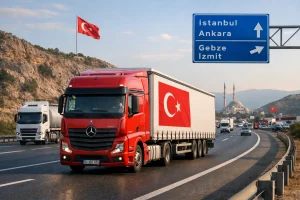
- Lower prices for goods or services – import often allows you to buy products more cheaply than those offered in Poland. One example is importing goods from China, where production costs are much lower. Let’s not forget the option of importing from Turkey, which is becoming increasingly popular among Polish businesses.
- Flexibility in production – thanks to import, production can be adapted to changing market needs without investing in the development of your own production lines.
- New opportunities to grow your business – import allows you to introduce goods that would be unprofitable to manufacture in Poland.
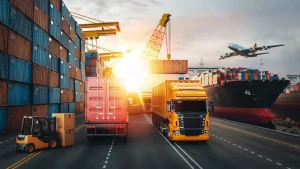
- A variety of international transport methods – you can use air, sea, rail or road transport, which gives enormous flexibility and the ability to match costs and delivery times to your own needs.
The simplified procedure for importing goods
Many businesses use the so-called simplified import procedure, which offers certain facilitations, especially with regard to VAT and settlement for the period in which the tax obligation on the import of goods and services arose. Under the simplified procedure you can settle without first paying the tax to the customs office. Within this procedure you can settle VAT on imported goods (e.g. from China) in the VAT-7 or VAT-7K return, which makes managing the company’s finances much easier.
To use this procedure, several conditions must be met, such as:
- having the status of a registered importer,
- keeping appropriate customs records,
- lodging customs declarations regularly.
This significantly shortens the waiting time for customs clearance and simplifies import formalities.
Parallel import
Parallel import is a specific form of import that mainly concerns medicines. It is the import of goods that are authorised for sale both in Poland and in other European Union countries. In practice this means you can bring in cheaper but equally effective medicines from other EU countries, provided they have the same properties as those available in Poland.
Benefits of parallel import:
- lower prices – thanks to parallel import you can bring medicines to market at a lower price, which benefits patients.
- greater availability of medicines – import ensures continuity of medicine supplies, which is particularly important when pharmacies face shortages.
The goods most commonly imported into Poland
Poland, as a country of growing economic importance, imports a huge quantity of goods from all over the world. The most commonly imported goods are:
- electronics and household appliances – these products are often cheaper abroad, especially in Asia,
- clothing and textiles – Poland imports large quantities of clothing, mainly from China and Turkey,
- mineral raw materials and materials – coal, steel and copper are raw materials that Poland often sources from Russia, Ukraine and the countries of the Middle East,
- medicines and medical products – parallel import allows cheaper medicines with the same properties as locally produced ones to be brought into Poland.

Which countries does Poland import goods from most often?
Poland maintains trade relations with many countries, but certain markets dominate its imports of goods:
- China – the main supplier of electronics, clothing and household appliances.
- Germany – Poland’s largest trading partner within the European Union, supplying mainly machinery and industrial equipment.
- Italy – we import mainly clothing, footwear and luxury products from here, but also food products.
- Turkey – Turkey is one of the increasingly popular import destinations, especially in the textile, electronics and automotive industries. It is worth taking care not only of the formalities, but also of efficient and safe transport from Turkey to Poland, which we provide end-to-end – from collection to customs clearance.
Import – a complicated but profitable world of business
Import is an extremely profitable process for companies that want to grow on the international market. Although it requires numerous formalities, the benefits of lower costs, access to unique products and flexibility in production make it well worth exploring.
We are ready to support you in the process of importing from Turkey. Understanding what import is and what its advantages and disadvantages are is the key to success in international trade. Contact us to discuss the details of our cooperation.