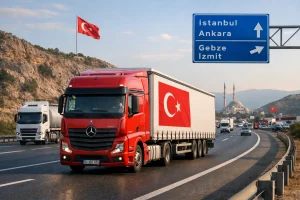

Cabotage – what is it
Cabotage is the commercial carriage of cargo performed by a vehicle registered in one country within the territory of another country. It takes place in accordance with specific regulations and rules. The term applies to road, sea and air transport alike. However, the most common type of cabotage is road transport, where foreign carriers perform carriage within the territory of another country, making use of the possibility of temporarily providing transport services.
Cabotage – examples
An example of cabotage carriage of goods is when a transport company from one European Union country (e.g. Poland) carries a load within another member state (e.g. France or Greece). Such carriage of goods within a country that is not the country where the transport company is based is called cabotage. Cabotage allows carriers to use their vehicles more efficiently and reduce empty runs when performing international transport orders.
Cabotage transport – rules
International cabotage carriage is subject to specific rules and legal regulations designed to ensure fair competition and protect local transport markets.
The most important cabotage rules include:
- time limits – cabotage may only be performed for a specified period after the completion of an international carriage.
- operation limit – only a limited number of cabotage operations may be performed within a specified period.
- registration and documentation – carriers must keep appropriate documentation and must hold a permit to perform international transport in the form of cabotage.
Cabotage transport consists in carrying goods within a single country by a carrier from another country, where the carriage may begin after the complete or partial unloading of goods delivered to a destination in that country. The regulations state that cabotage deliveries should be made with the same vehicle with which the carrier crossed the border. Importantly, the last cabotage delivery must be completed within 7 days of the completion of the first unloading in the host member state. For example, a Polish transport company can perform a cabotage operation between two cities in Spain, provided it first delivered goods from Poland.
Cabotage – benefits for carriers
Cabotage brings a number of benefits to carriers. It allows the vehicle fleet to be used effectively by minimising empty runs and increasing vehicle turnover. It also offers the opportunity to generate additional income by performing carriage within a foreign country, which can be attractive especially when there are no orders on international routes. Cabotage transport also increases carriers’ operational flexibility, allowing them to adapt to changing market conditions and customer demand.
Cabotage – restrictions
Cabotage also has its restrictions, which can affect carriers’ operations:
- restrictive regulations – each EU member state may introduce its own restrictions on cabotage,
- checks and sanctions – breaching cabotage regulations can result in serious sanctions, including fines and a ban on performing carriage,
- local competition – carriers have to compete with local companies, which can sometimes be a real challenge.
Legal regulations on cabotage
Legal regulations on cabotage include a range of provisions and rules at both national and international level. Within the European Union, the key rules on cabotage are set out in Regulation (EC) No 1072/2009 of the European Parliament and of the Council, which defines the conditions for access to the international and cabotage transport market.
Under these rules, cabotage may be performed by carriers holding a Community licence, but is subject to certain time and quantity limits. In addition, each member state may introduce its own cabotage regulations, which can lead to differences between countries. These may be administrative acts, statutes or implementing regulations that set out in detail the rules governing various aspects of international transport.
It is also important to comply with the rules on drivers’ working time and transport documentation, such as consignment notes (CMR) and cabotage documents. These regulations ensure fair competition on the transport market and protect the interests of both carriers and customers.
Requirements for international cabotage
The requirements for international cabotage include holding a Community licence, complying with drivers’ working time rules, registering and keeping transport documentation, and holding appropriate liability and cargo insurance. In addition, carriers must comply with the local regulations of the country in which they perform cabotage. These requirements are key to the legality and effectiveness of international cabotage and to ensuring the safety and quality of the services provided.

Documents required for cabotage
When performing cabotage, carriers must hold and present on request documents such as:
- Community licence – confirming the right to perform international carriage,
- transport documents (international CMR consignment note) – proving the international carriage after which the cabotage takes place,
- evidence of cabotage operations – documentation showing the date of unloading, the operations performed and route details for each transport service performed as cabotage,
- documents recording drivers’ working time – tachographs and working time records, in accordance with EU regulations.
Who can perform cabotage?
Cabotage may be performed by a carrier that meets specific conditions and holds the appropriate authorisations – first of all, it must be registered in an EU or EFTA member state and hold a transport licence for international transport.
In the European Union, carriers from member states holding a Community licence may perform cabotage in other EU countries, provided they comply with the applicable rules and restrictions. It is important for carriers to be familiar with the regulations in force in the country where they plan to perform cabotage, in order to avoid potential sanctions and legal problems.
Cabotage – summary
Cabotage offers many benefits to transport and forwarding companies. It increases fleet efficiency, reduces fuel costs and road tolls and provides greater flexibility in making deliveries. In addition, cabotage allows better use of vehicles and drivers, which translates into higher profitability of operations. Investing in this form of transport is a step towards more sustainable and profitable logistics operations.