What is freight forwarding?
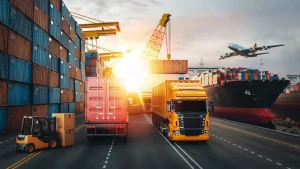
Freight forwarding plays a key role in logistics and deals with organising the carriage of goods. It can be defined as the activity of organising, coordinating and monitoring the transport of goods from the point of origin to the destination. Its main aim is the efficient carriage of loads in a way that is optimal in terms of time, cost and effectiveness. First of all, we distinguish road forwarding, air forwarding, sea forwarding and rail forwarding.
What types of freight forwarding are there?
There are several different types of freight forwarding, meeting different customer needs and requirements when organising the carriage of goods.
Classification of forwarding by territorial scope:
- International forwarding – covers the transport of goods between different countries.
- Domestic forwarding – covers the transport of goods within a single country.
Classification of forwarding by the scope of activities performed:
- Pure forwarding – deals exclusively with accepting forwarding orders and supervises the quality of services during the execution of the order.
- Mixed forwarding – covers a fuller range of services, combining elements of both forwarding and the transport of goods. In addition to customs and tax formalities, the forwarding company also provides services related to organising transport, selecting the means of transport, route planning, shipment monitoring and resolving any transport-related problems.
Classification of forwarding by the complexity of the forwarding process:
- Single-mode forwarding – in this type of forwarding, all the work is carried out using one of the available modes of transport.
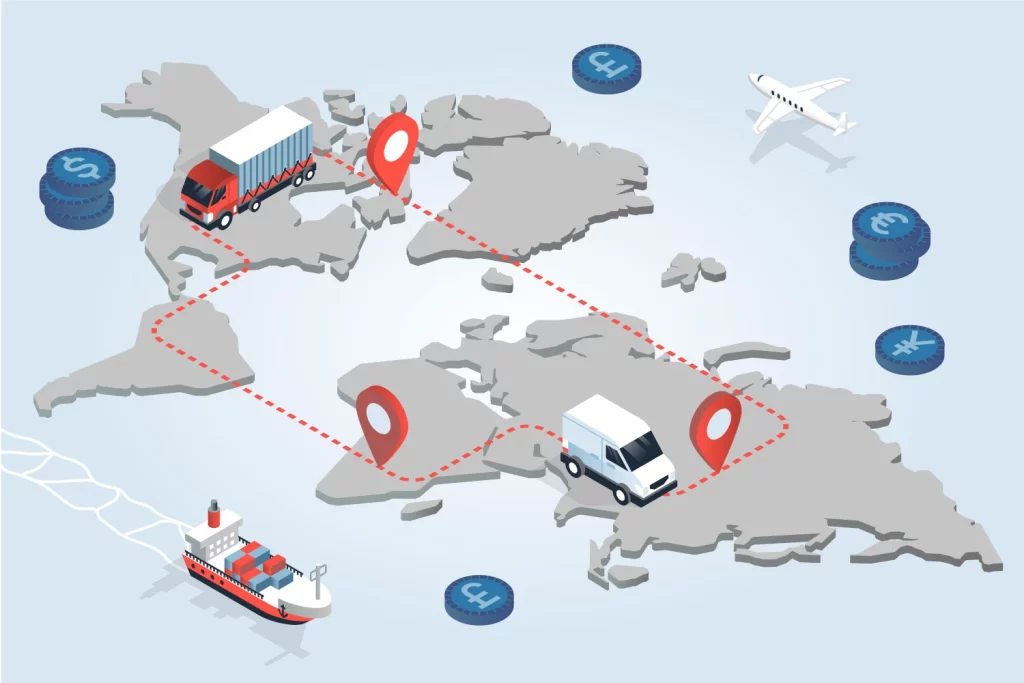
- Intermodal forwarding – operates within combined transport and thus uses several different modes of transport.
Classification of forwarding by means of transport:
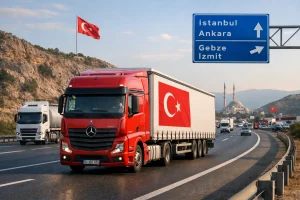
- Road forwarding – the most popular way of transporting goods. Road forwarding offers flexibility, fast delivery and the ability to reach places that are difficult to access by other means of transport.
- Air forwarding – allows goods to be delivered quickly over long distances. It is particularly useful for high-priority shipments or the transport of products with a short shelf life.
- Sea forwarding – covers the carriage of goods by sea-going vessels. It is an ideal solution for large quantities of goods or international shipments, and also offers competitive prices and wide geographical coverage. Sea forwarding is usually chosen when the transit time of the cargo is not of major importance.
Classification of forwarding by the size of the load carried:
- Groupage forwarding – concerns the organisation of transport for small quantities of goods that do not fill an entire vehicle or container.
- Container forwarding – involves the carriage of goods in containers, which are standardised transport units. Containers can be carried by sea, rail or road.
What are the duties of a freight forwarder?
The basic duties of a freight forwarder are essential to ensure the smooth and efficient flow of goods in the supply chain. The forwarder is responsible for organising transport, managing transport documentation and coordinating activities between customers, carriers and other parties involved in the process.
One of the forwarder’s main tasks is selecting the means of transport for a given load. They must analyse various factors, such as routes, costs, delivery dates, the specifics of the goods and the customer’s requirements. They then negotiate the terms of the contract and monitor the progress of the transport.
The forwarder is also obliged to prepare the necessary transport documentation. This includes drawing up consignment notes, invoices and other customs and commercial documents. All these documents must be carefully prepared and delivered on time.
Coordination of activities is another very important duty of the forwarder. They are responsible for determining the optimal transport route, taking into account time and cost efficiency and safety. The forwarder must also maintain constant contact with both customers and carriers to ensure the transport process runs smoothly. This requires effective communication, solving problems as they arise and monitoring the progress of the order.
Forwarding services – what do they include?
The role of forwarding in logistics is invaluable. A professional approach to organising carriage allows businesses to keep running smoothly, and forwarding companies can contribute significantly to optimising logistics processes. Effective cooperation between producers and consumers becomes possible thanks to proper planning, coordination and control of the flow of goods.
Forwarding tasks may include:
- accepting forwarding orders,
- organising transport from point A to point B,
- negotiating transport contracts,
- selecting the appropriate means of transport,
- monitoring delivery punctuality and resolving any logistics problems,
- compiling transport documentation,
- overseeing customs clearance,
- maintaining contact between suppliers and recipients,
- storing shipments,
- transporting the goods.
Forwarding vs transport
Forwarding and transport are two terms often used interchangeably in the logistics industry. The basic difference between forwarding and transport is their scope. Forwarding refers to managing the process of carrying goods from point A to point B. The forwarder is responsible for organising and coordinating the entire operation, including selecting the appropriate means of transport and negotiating contracts with carriers.
Transport, on the other hand, refers directly to the physical movement of goods from one place to another. It may involve various means of transport, such as trucks, trains or ships. In the case of transport there is no need to involve a forwarder – you can use the services of carriers directly.
Another important difference between forwarding and transport is the scope of responsibility. A forwarding company bears greater responsibility for the entire carriage process – from the moment the goods are loaded until they are delivered to their destination. It is obliged to take care of documentation, insurance and monitoring the status of the shipment.
A transport company, on the other hand, is mainly responsible for the safe and timely delivery of the goods. It does not have the same role in managing the entire carriage process as a forwarder.