What does transit mean?
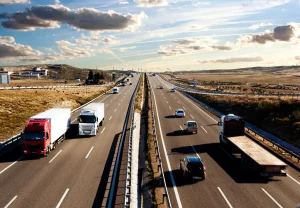
Transit is the carriage of goods from country A to country B through country C. We are dealing with transit when the transport of goods passes through the territory of a country where there is neither loading nor unloading. For example, we speak of transit transport when goods travel from Poland to Austria via the Czech Republic. In this case the transit country is the Czech Republic.
Transit carriage is governed, among others, by the Convention and Statute on Freedom of Transit and the Convention on Transit Trade of Land-locked States, which provide for the carriage of goods under customs supervision without the need to pay customs charges (e.g. customs duties, excise duty, VAT and others) in transit countries. Its main purpose is the free flow of goods between states.
Types of transit
In transport and logistics there are several types of transit worth knowing. They include indirect and direct transit of goods, as well as external and internal transit. Below we explain the differences between them.
Indirect and direct transit
Direct and indirect transit are among the most common types of transit. Direct transit of goods is when the goods are carried directly to the destination without transhipment or storage, using a single means of transport. It is the shortest and fastest transport route, but it is not always possible due to geographical or logistical constraints. In short – direct transit means transporting goods without any interruptions along the way. Indirect transit, on the other hand, covers situations in which the goods may be stored in the transit country – most often because of a change of means of transport or splitting the load into smaller parts.
Internal transit
Internal transit of goods (also known as domestic transit) refers primarily to the transport of goods within the territory of a single country or region, without the need to cross borders. Internal transit applies only to the transport of goods within the European Union or countries covered by trade agreements. Goods can be transported between regions within the same country and may involve various means of transport. Internal transit procedures are considerably simplified, which eliminates unnecessary bureaucracy and thus shortens the time it takes goods to move.
External transit
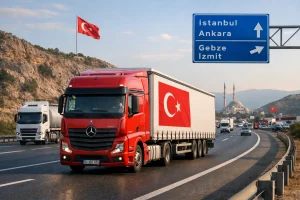
The external (international) transit procedure is somewhat more complicated, because it concerns the movement of goods between countries not covered by trade agreements (i.e. not within the European Union and not part of the so-called Community). Consequently, transit requires the completion of the appropriate customs formalities related to trade policy and the payment of the transit customs charges imposed by the country concerned. An example of such transit is the carriage of goods from Poland to Turkey through other countries outside the European Union, which requires the appropriate customs formalities to be completed. External transit of goods occurs when reaching the destination requires goods to be moved through one or more countries and the destination is not covered by common trade agreements. Importantly, the goods carried must comply with the customs rules of transit both for export from the country of origin and for import into the country of destination.
Transit warehouse
Transit warehouses are places intended for storing goods for the duration of the transit or TIR procedure. Their purpose is to ensure the safe storage of goods while they are moved through the territory of a country or region.
Transit carriage – legal regulations
Transit carriage is governed by:
- the Convention and Statute on Freedom of Transit,
- the Convention on Transit Trade of Land-locked States,
- the United Nations Convention on the Law of the Sea (the so-called Jamaica Convention),
- the Convention on the Contract for the International Carriage of Goods by Road (the CMR Convention),
- the TIR Convention.
Transit procedures in force in Poland
The transit procedures in force in Poland are important for the smooth flow of goods through our country. They make it possible to move goods efficiently and safely through Polish territory, which is crucial for the development of international trade. Knowing and complying with these procedures is essential for transport companies as well as importers and exporters, in order to avoid delays and problems during the transit of goods.
NATIONAL TRANSIT PROCEDURE
The main aspects of the national transit procedure cover transit between:
- border customs offices – this procedure applies when foreign goods pass through Poland’s borders, with Poland acting as the transit country,
- internal customs offices – applies to cases where foreign goods are carried between Polish customs warehouses,
- border customs offices and internal customs offices – this procedure applies when Poland is the destination for a foreign consignment.
TIR PROCEDURE
The TIR procedure is an international system of customs facilitations used in the international transport of goods. The TIR procedure allows goods to be moved through the territory of different countries without reopening the documentation process and without checks at borders, which speeds up and facilitates international trade. The TIR system reduces customs charges and allows direct transit carriage from point A to point B, which speeds up the movement of loads across national borders. Avoiding delays at borders and the need to pay customs charges at every border saves not only time but also the costs of international transport of goods. Thanks to the sealing of goods and the supervision of customs authorities, the TIR procedure provides greater security and certainty that the goods will reach their destination. The TIR Convention applies exclusively to road transport.
COMMON TRANSIT PROCEDURE (CTP)
The Convention on a Common Transit Procedure forms the basis for carrying goods between the countries of the European Union and the EFTA states (e.g. Switzerland, Norway, Liechtenstein, Iceland). Under this procedure, goods can be carried under the T1 or T2 procedures, covering Community goods or goods originating outside the EU.
The T1 procedure applies to road, air and sea transport and covers goods originating outside the European Union. The T2 procedure, on the other hand, applies exclusively to road transport and covers Community goods.
Documents required during transit transport
- Documents specified by customs law (including consignment notes),
- ATA Carnet (a carnet for the temporary admission of goods, which eliminates the complicated customs procedure),
- TIR Carnet.